Are You Properly Insured for a Natural Disaster?

How to Prepare Your Insurance Coverage Before Disaster Strikes

With natural disasters on the rise—from hurricanes and floods to wildfires and winter storms—it’s critical to make sure your insurance coverage is ready before the unexpected happens. Follow these four essential steps to assess and strengthen your protection:

Step 1: Review Your Current Policy
Many homeowners assume they’re covered for all natural disasters, but standard policies often exclude floods, earthquakes, and sump pump backups. Contact your account manager to clarify what your policy includes—and what it doesn’t.

Step 2: Evaluate Your Risk Based on Location
Where you live determines your exposure to specific threats. In New York, that may include flooding, snowstorms, and even earthquakes. Use FEMA’s flood maps and local emergency planning tools to understand your area’s vulnerabilities.

Step 3: Add Supplemental Coverage if Needed
If your current policy lacks protection for certain risks, consider these additions:

  • Flood Insurance (through NFIP or private carriers)

  • Sump Pump Backup Coverage

  • Earthquake Insurance

These can usually be added as separate policies or endorsements.

Step 4: Create a Home Inventory
After a disaster, a home inventory can make filing a claim faster and more accurate. Take photos or videos of your belongings, save receipts, and store this information in a secure place. Need help getting started? Your account manager can recommend easy-to-use templates.

These proactive steps can help you avoid costly surprises and ensure you’re financially protected if disaster strikes.

Ann Wittlinger & Gail McCollum Retire

Honoring the Careers and Retirement of Ann Wittlinger & Gail McCollum

Emerling Floss Murphy & Associates is proud to honor the remarkable careers and well-earned retirements of two exceptional team members: Ann Wittlinger and Gail McCollum. Their years of service, professionalism, and personal warmth have left a lasting legacy on both our agency and the clients they served.

Ann Wittlinger
After more than a decade of dedicated service, Ann Wittlinger, our valued Commercial Lines Account Manager, has retired. Since joining the agency in August 2013, Ann has been a constant source of reliability, knowledge, and positivity. Her journey in the insurance industry began as a Legal Assistant, but her ambition and skill quickly led her to pursue her Broker’s License. Her approachable nature and deep industry knowledge made her a trusted advisor to clients and a respected colleague within the agency.

Ann’s contributions will be missed, but her legacy of excellence continues. Clients formerly under Ann’s care will be contacted shortly to be introduced to their new account manager. We are committed to ensuring a smooth and seamless transition.

Gail McCollum
In August 2024, we also celebrated the retirement of Gail McCollum, who gave 15 years of dedicated service to the agency. Gail joined us in 2009 as a Commercial Lines Account Manager and stepped into a leadership role in 2021, where she became a mentor and support system for her team. Her in-depth expertise and compassionate leadership were cornerstones of her success and deeply appreciated by both staff and clients.

Now living in Cambria, Gail is enjoying retirement by spending time with her husband, four children, their spouses, and five grandchildren. She continues her involvement in ministry at Community Bible Church in Lockport and finds joy in crafting, gardening, and fishing.

We are deeply grateful to both Ann and Gail for their many years of service and meaningful contributions. We wish them happiness, relaxation, and fulfillment in this next chapter of life.

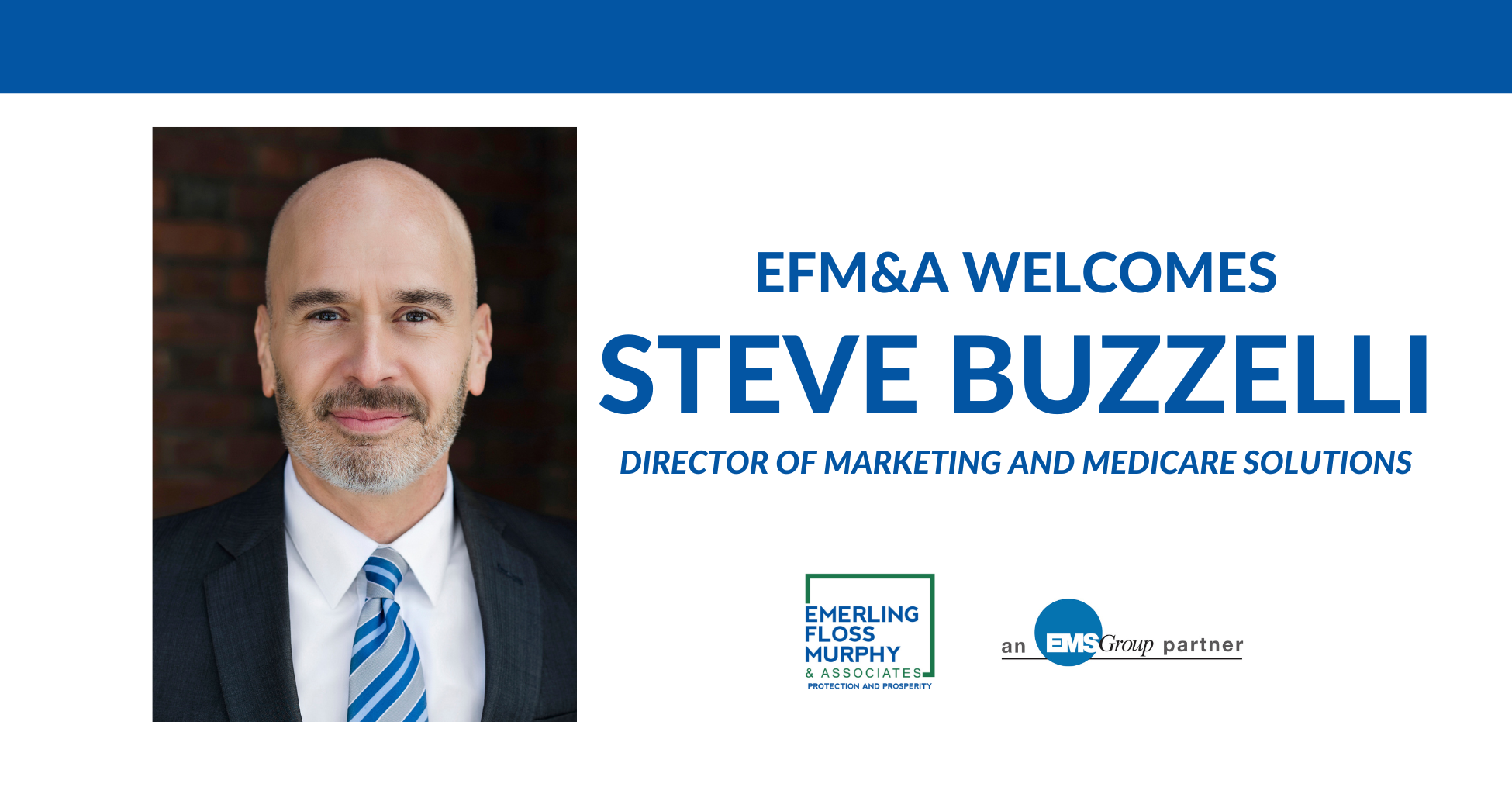
EFM&A Welcomes Steve Buzzelli

EFM&A proudly announces the appointment of Steven Buzzelli as the Director of Marketing and Medicare Solutions. With a robust background spanning marketing, business development, and expertise in Medicare solutions, Buzzelli brings a wealth of knowledge to his new role.

Steven Buzzelli holds a Bachelor of Science in Health & Fitness from Springfield College, complemented by an MBA from Canisius College. His journey into healthcare and marketing began with notable time at renowned companies such as Northwestern Mutual, BlueCross BlueShield, and Fisher-Price.

In his most recent endeavor, Buzzelli’s role as Director of Marketing and Medicare Solutions at EFM&A commenced in March 2024.

Throughout his career, Buzzelli has established significant partnerships and achieved organizational goals. Notably, he forged a successful collaboration with the Jacobs School of Medicine and Biomedical Sciences, providing financial education to medical students.

Beyond his professional achievements, Buzzelli is deeply committed to community service. He serves on the Board of Directors of several local organizations. He has been recognized for his philanthropic endeavors, including being named the East Aurora Boys & Girls Club Man of the Year and co-chairing United Way’s Day of Caring for Western New York.

“Joining EFM&A is an exciting opportunity to continue my passion for marketing and contribute to the company’s success,” said Steven Buzzelli. “I look forward to leveraging my experience and skills to drive growth and provide exceptional Medicare solutions for our clients and the community.”

Steven Buzzelli resides in East Aurora, New York, with his wife Anne, where they have raised their children.

His dedication to both professional excellence and community enrichment embodies the values that EFM&A stands for.


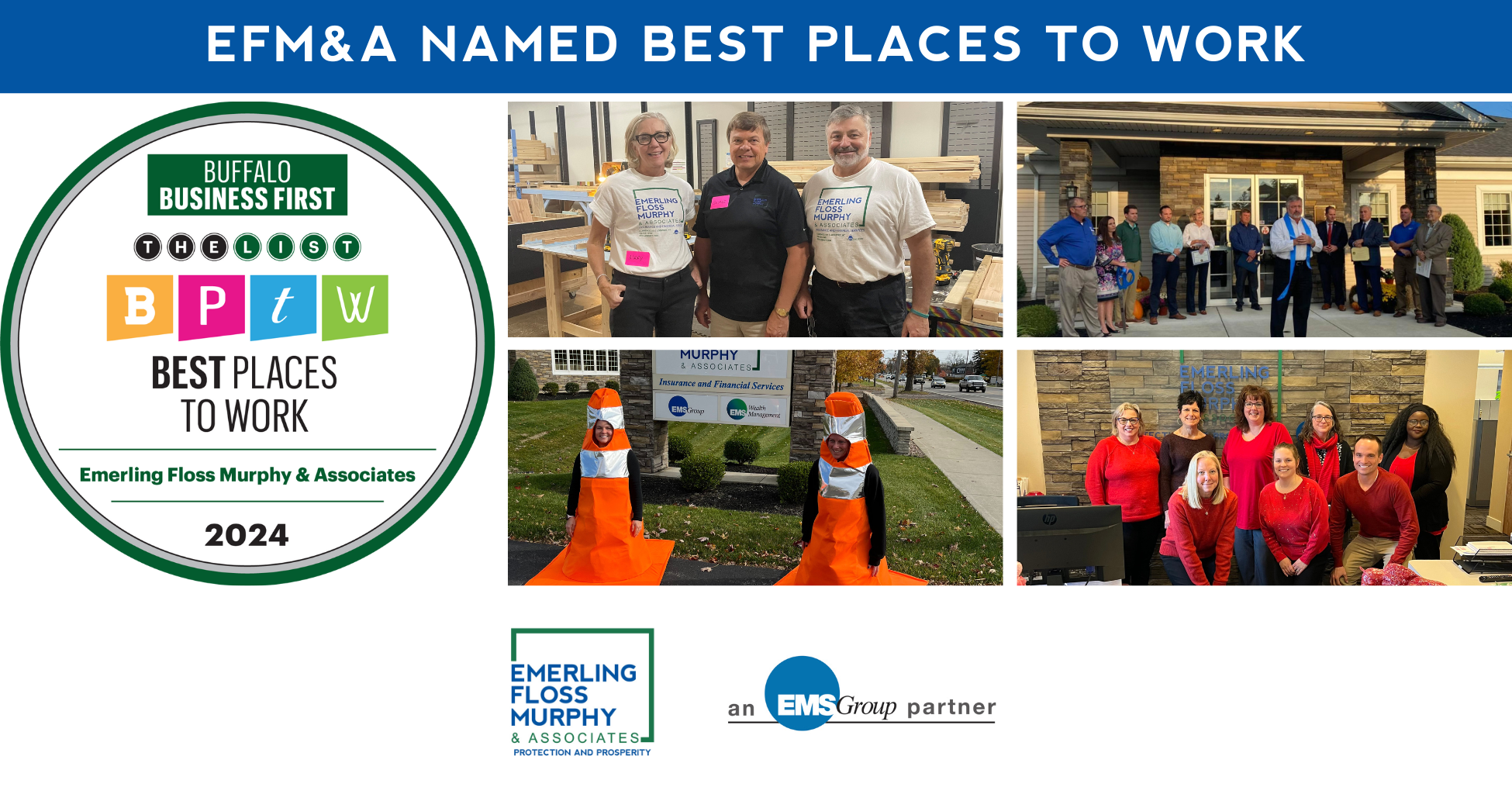
EFM&A Named 2024 Best Places to Work

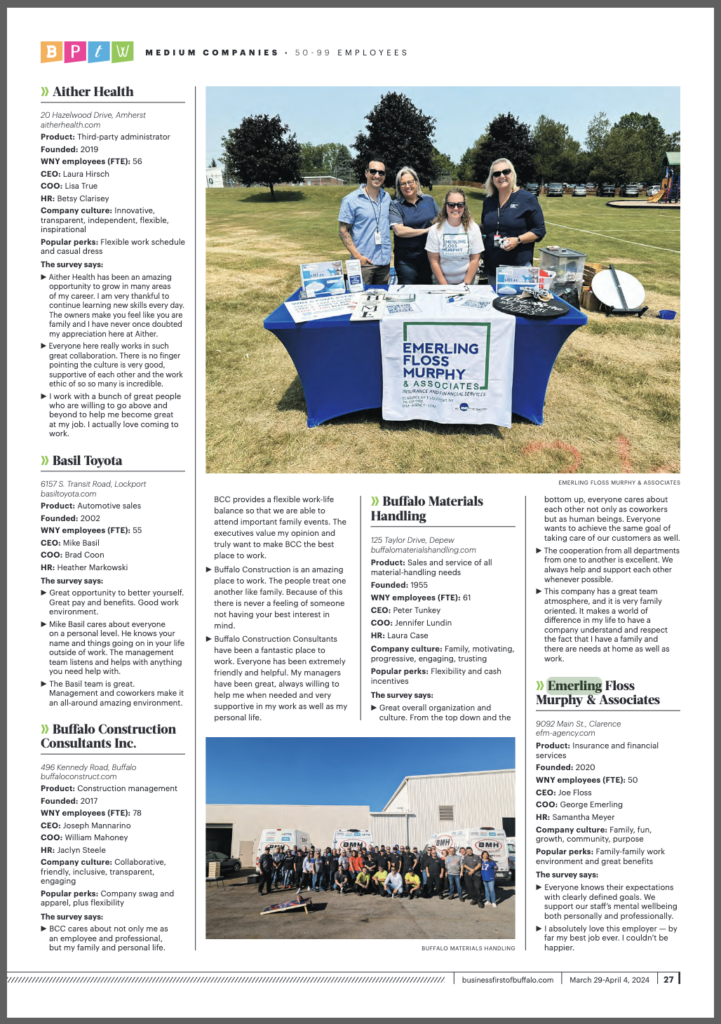
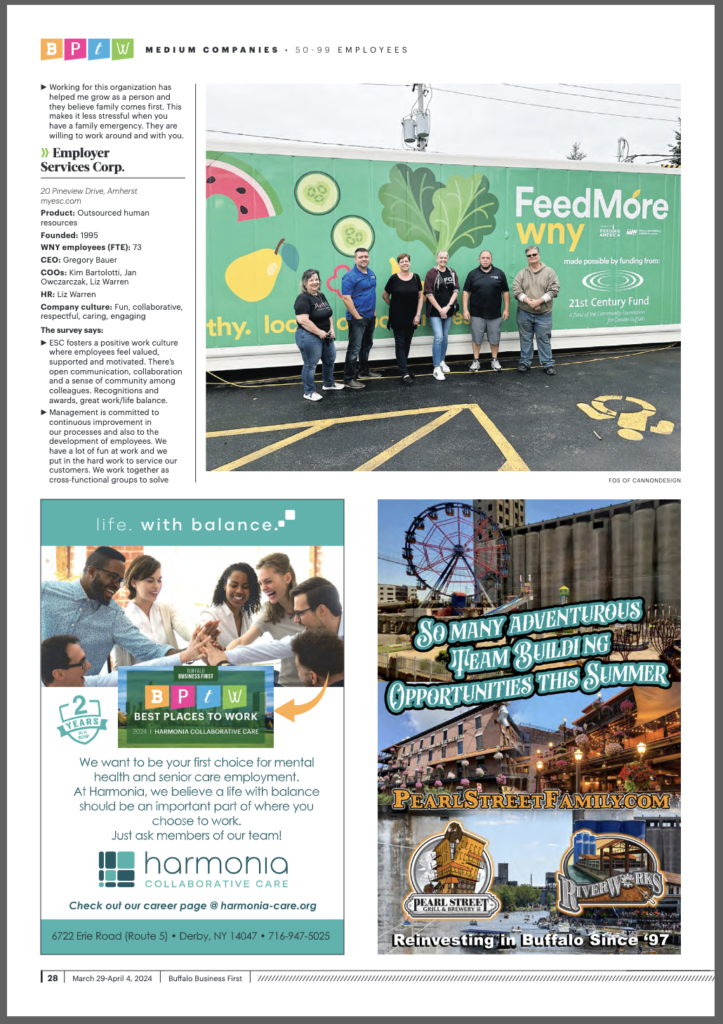
Emerling Floss Murphy & Associates has been named one of the Best Places to Work in Western New York by Buffalo Business First. This is our 4th consecutive year receiving this honor, and also the highest ranking we have received in company history.

This is an honor we take seriously at EFM&A because we believe that providing a positive work culture attracting strong talent from the industry while maintaining strong customer service will directly impact the client experience.

Here’s how it works:

  • Employees are asked to complete the employee engagement survey, which was developed in 2003 by Quantum Workplace, leaders in the field of employee engagement.
  • The survey measures six key engagement categories: communication, employee needs, manager effectiveness, personal engagement, team dynamic, and trust in leadership.
  • Companies are ranked according to their overall score.
  • The total number of survey responses is factored into the overall score. Winners are chosen 100% based on the results of the survey. That means only the employees determine the score.

New York Eases Auto Insurance Rules with Inspection Waiver

New York Law Allows Insurance Companies to Waive Pre-Insurance Photo Inspections

A significant update to New York’s auto insurance requirements is now in effect, easing a long-standing burden on drivers and insurance providers alike. As of May 15, 2025, a new state law allows insurance carriers to waive pre-insurance photo inspections—a move widely supported by the industry and consumer advocates.

Previously, New York law required many drivers to complete a photo inspection before obtaining comprehensive or collision coverage. If the inspection was not completed within 14 days of initiating a policy, that portion of coverage would be automatically terminated. The original mandate, enacted in the late 1970s, was designed to curb fraudulent claims by ensuring vehicles were not damaged before being insured.

While the intention behind the rule was sound, many in the industry argued that the law had become outdated. With modern advances such as vehicle tracking technologies, VIN etchings, and improved fraud detection methods employed by special investigation units (SIUs), insurers contend that the inspection requirement no longer serves a practical purpose.

The new law, backed by industry groups such as Big I NY, provides a multi-year window—through October 2027—during which carriers may choose to waive these inspections. Several major insurance companies have already adopted the change, and more are expected to follow.

Supporters of the legislation argue that the change reduces unnecessary inconvenience for consumers and small business owners without compromising the integrity of coverage. They also highlight the benefits of a more streamlined, customer-friendly insurance experience. Those in favor of retaining the old requirements maintain that photo inspections continue to serve as a tool in combating fraud and keeping premium rates manageable.

It is important to note that the new law does not alter any existing policies or reduce consumer protections. Rather, it removes a regulatory hurdle that many believe had outlived its usefulness.

For consumers purchasing auto insurance in New York, this change is expected to simplify the onboarding process and reduce paperwork—offering a more efficient path to securing full coverage.


Fix a Leak Weak

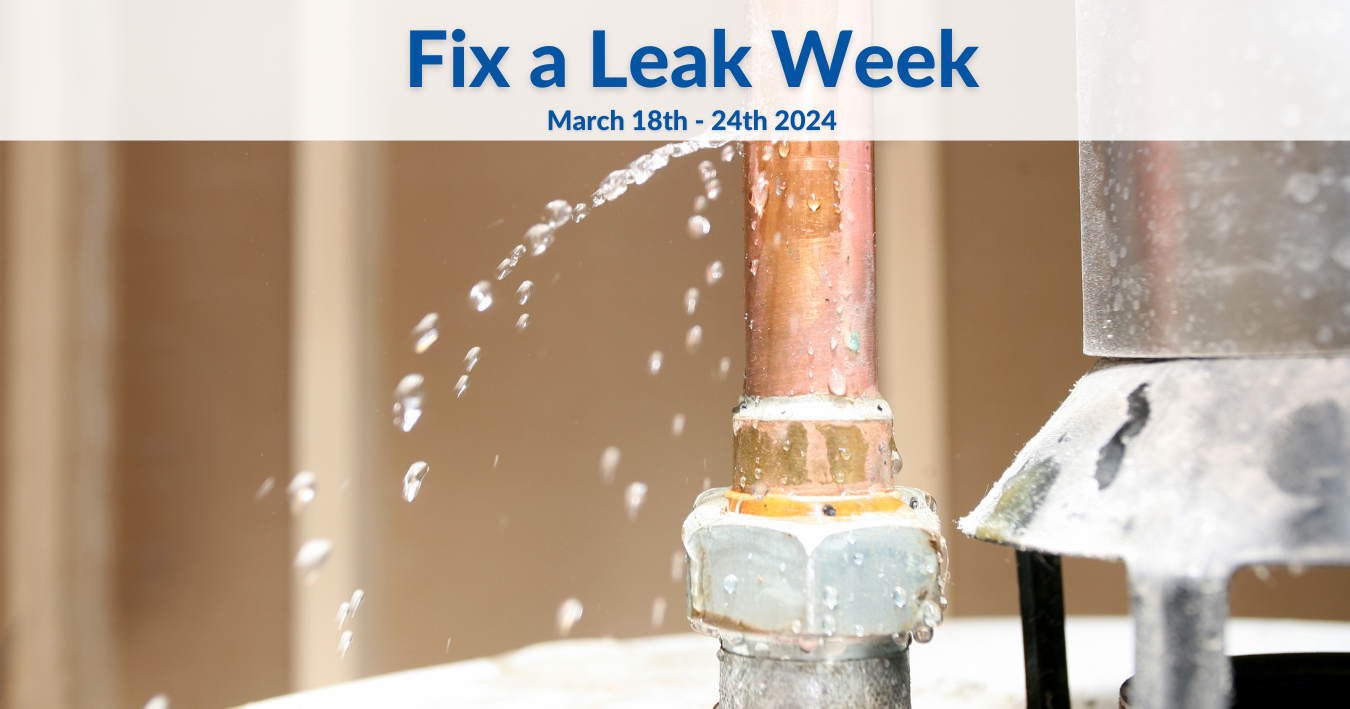
The United States Environmental Protection Agency has announced that March 18th – 24th is “Fix a Leak Week.” As your insurance agency, we find this a good time to remind you that finding and fixing those leaks not only helps the environment but also can help you financially and prevent serious damage to your home or business.

The average household’s leaks can account for nearly 10,000 gallons of water wasted annually; ten percent of homes have leaks that waste 90 gallons or more daily. Common types of leaks found in the house are worn toilet flappers, dripping faucets, and other leaking valves. These types of leaks are often easy to fix, requiring only a few tools and hardware that can pay for themselves in water savings. Fixing easily corrected household water leaks can save homeowners about 10 percent on their water bills.

To check for leaks in your home, you first need to determine whether you’re wasting water and then identify the source of the leak.

Here are some tips for finding leaks:

  • Take a look at your water usage during a colder month, such as January or February. If a family of four exceeds 12,000 gallons per month, there are serious leaks.
  • Check your water meter before and after a two-hour period when no water is being used. If the meter changes at all, you probably have a leak.
  • Identify toilet leaks by placing a drop of food coloring in the toilet tank. If any color shows up in the bowl after 10 minutes, you have a leak. (Be sure to flush immediately after the experiment to avoid staining the tank.)
  • Examine faucet gaskets and pipe fittings for any water on the outside of the pipe to check for surface leaks.

Leaks can run, but they can’t hide!

Any and all things that connect to water could have the potential to leak!


Showerheads

Toilets

Bathtubs

Appliances

Outdoor Water Areas

Car Insurance Day

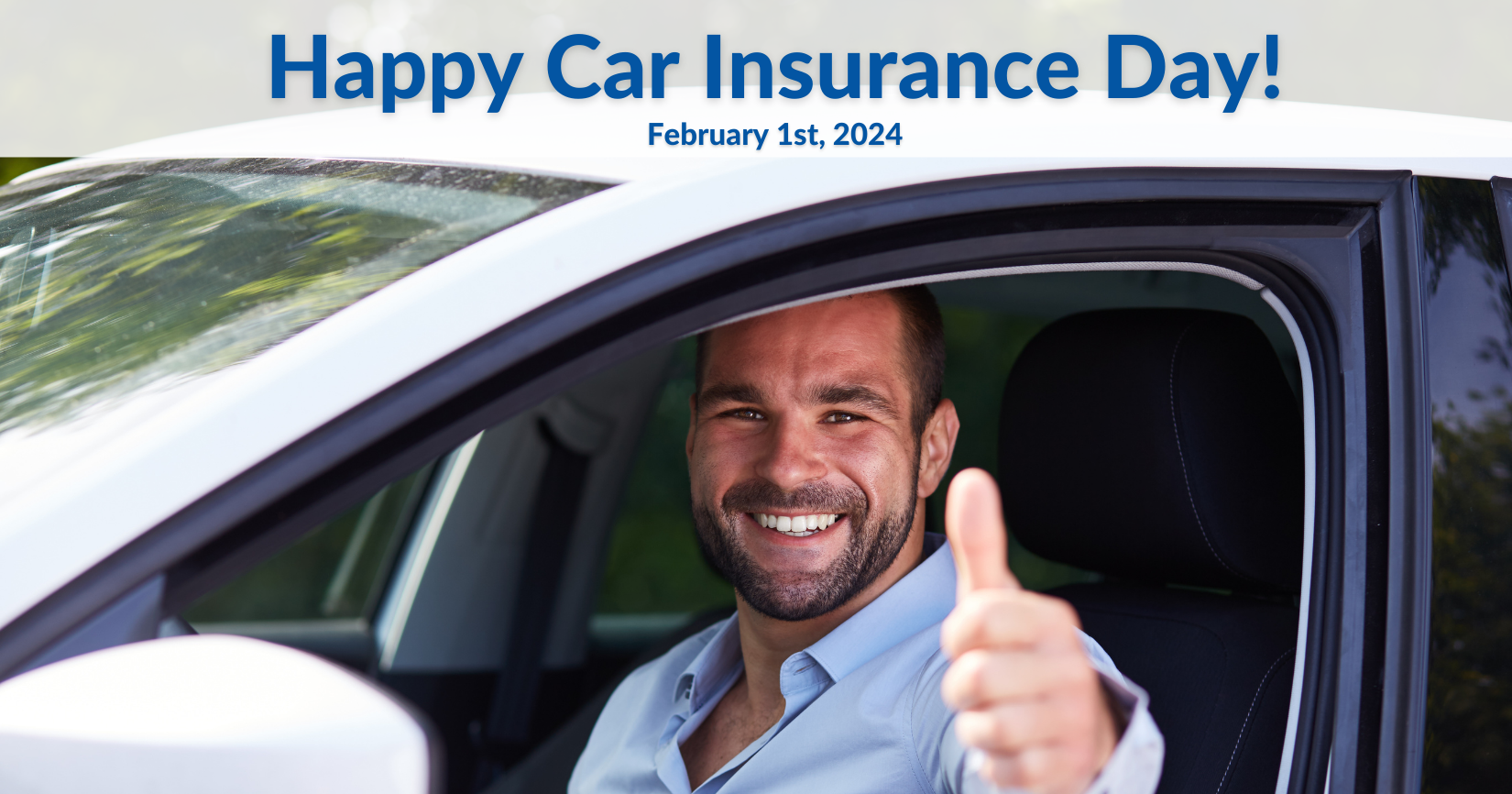
February 1st is Car Insurance Day – a day where we celebrate the importance of car insurance!

This day also serves as a reminder for motorists to review and ensure the adequacy of their auto insurance policies. Whether it’s protecting against accidents, theft, or unforeseen circumstances, car insurance plays a crucial role in providing financial security and peace of mind on the road.

Car Insurance Fun Facts:

Car Insurance is Mandatory in Most States
In the U.S., most states require drivers to have auto liability insurance before they can legally drive a car.


Your Credit Score Can Impact Your Premium
Many insurers use credit information to price auto insurance policies. Research shows that those who effectively manage their credit have fewer claims.


Your Vehicle Model Affects Your Insurance Cost
Your vehicle’s make, model, and year can heavily impact your car insurance rates. Cars that are often stolen or expensive to repair might have higher insurance costs.


You Can Get Discounts for Safe Driving
Many car insurance companies offer discounts if you prove to be a safe driver over a certain period. These rewards can significantly lower your premium.  CLICK HERE to sign up for a defensive driving course today! 


Car Insurance Covers More Than Just Collision
Besides collisions, car insurance policies can cover various issues, such as damage from weather events, theft, and personal injury, depending on the type of policy purchased.

Car Insurance Checklist:

Below are some things to consider regarding your Auto Insurance.  Please contact your EFM Agency Account Manager if you have any questions about your current program.

Coverage Types and Limits:

  • Assess whether your current coverage aligns with your needs and financial situation.
  • Confirm the policy limits for each type of coverage.

Deductibles:

  • Review and understand the deductibles associated with each coverage type.
  • Evaluate whether you can comfortably afford the chosen deductibles in the event of a claim.

Discounts:

  • Confirm that you are taking advantage of all eligible discounts.
  • Signup online for the NYS Defensive Driving Courses!

Policy Exclusions and Limitations:

  • Familiarize yourself with any exclusions or limitations in your policy.
  • Understand circumstances where your coverage may not apply.

Claims Process:

  • Understand the process for filing a claim with your carrier.  You can also file a claim through our website.

Policy Renewal Terms:

  • Review the terms and conditions for policy renewal.
  • Be aware of any changes in coverage or premium rates.

Vehicle Changes:

  • Update the insurer if there are changes to your vehicle (e.g., modifications, additional safety features).
  • Confirm that your policy reflects accurate information about your car.

Driving Record:

  • Periodically check your driving record for accuracy.
  • Be aware of how any changes to your driving history may impact your premiums.

Emergency Roadside Assistance:

  • Verify whether your policy includes emergency roadside assistance.
  • Understand the extent of the coverage and any associated costs.

Policy Documents:

  • Keep a copy of your insurance policy documents.
  • Review the terms and conditions to stay informed about your coverage.

10 Bad Habits That Aren’t Good for Your Car

Bad habits. We all have them. And sometimes, they can be hard to shake. This is especially true when it comes to driving. Depending on how many years you’ve spent behind the wheel, certain habits may be deeply ingrained by now. And many of them can be bad for your car.

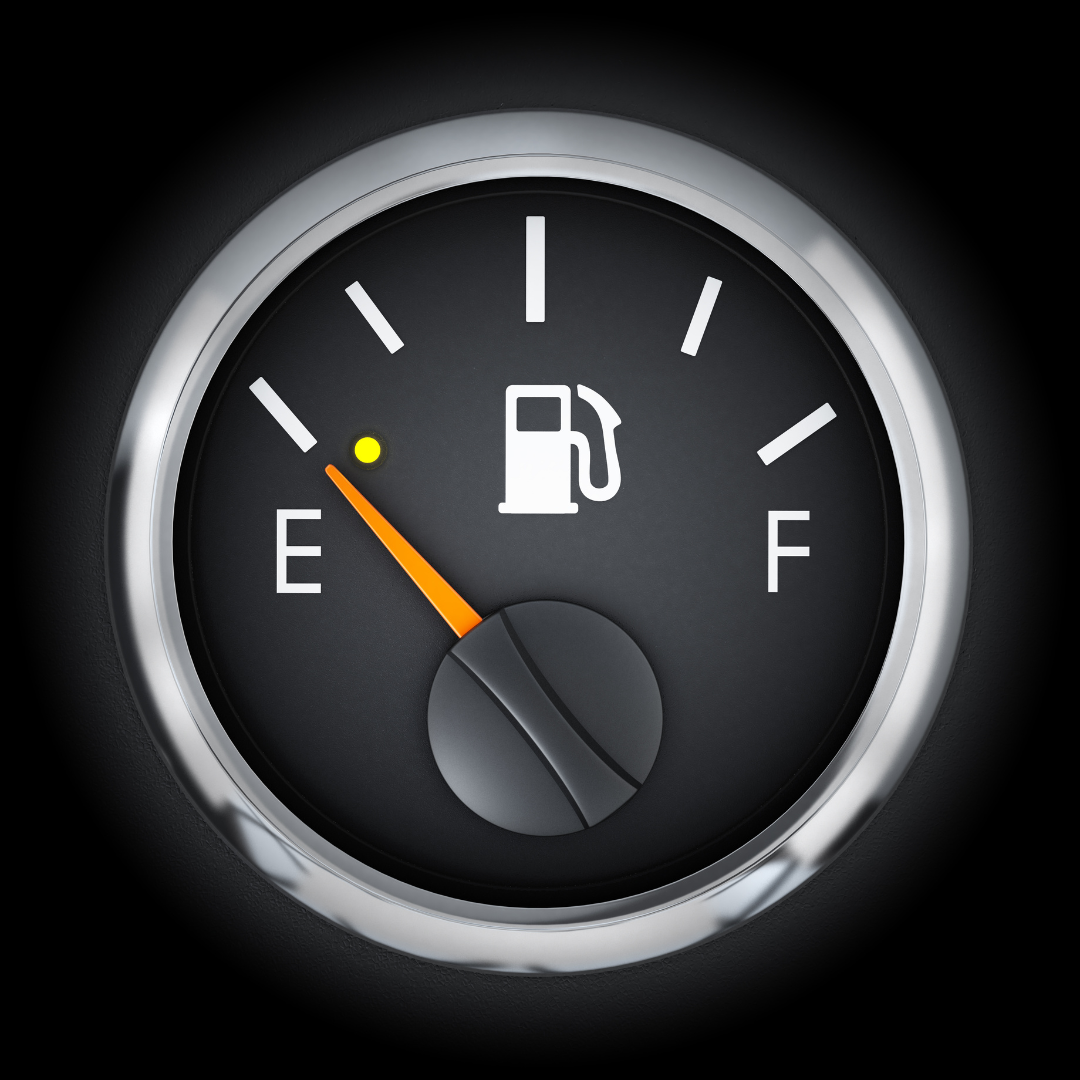
DRIVING ON EMPTY

Whether you’re running late and forget to fill up, or you’re just not paying attention to your fuel gauge, finding yourself low on gas can happen from time to time. But running out of gas is more than just inconvenient; it can also be hard on your car.

Why? Because critical components, like your vehicle’s fuel pump, aren’t designed to operate without gas. The fuel pump is submerged in the gas tank, where it uses fuel to cool and lubricate the mechanisms in the pump. Most fuel pumps can last for the life of your vehicle.

But when you run your car on empty, the pump can overheat, which could lead to a costly failure. And because the gas tank typically needs to be drained and removed to replace the pump, this labor-intensive job could cost upward of $1,000 to repair.

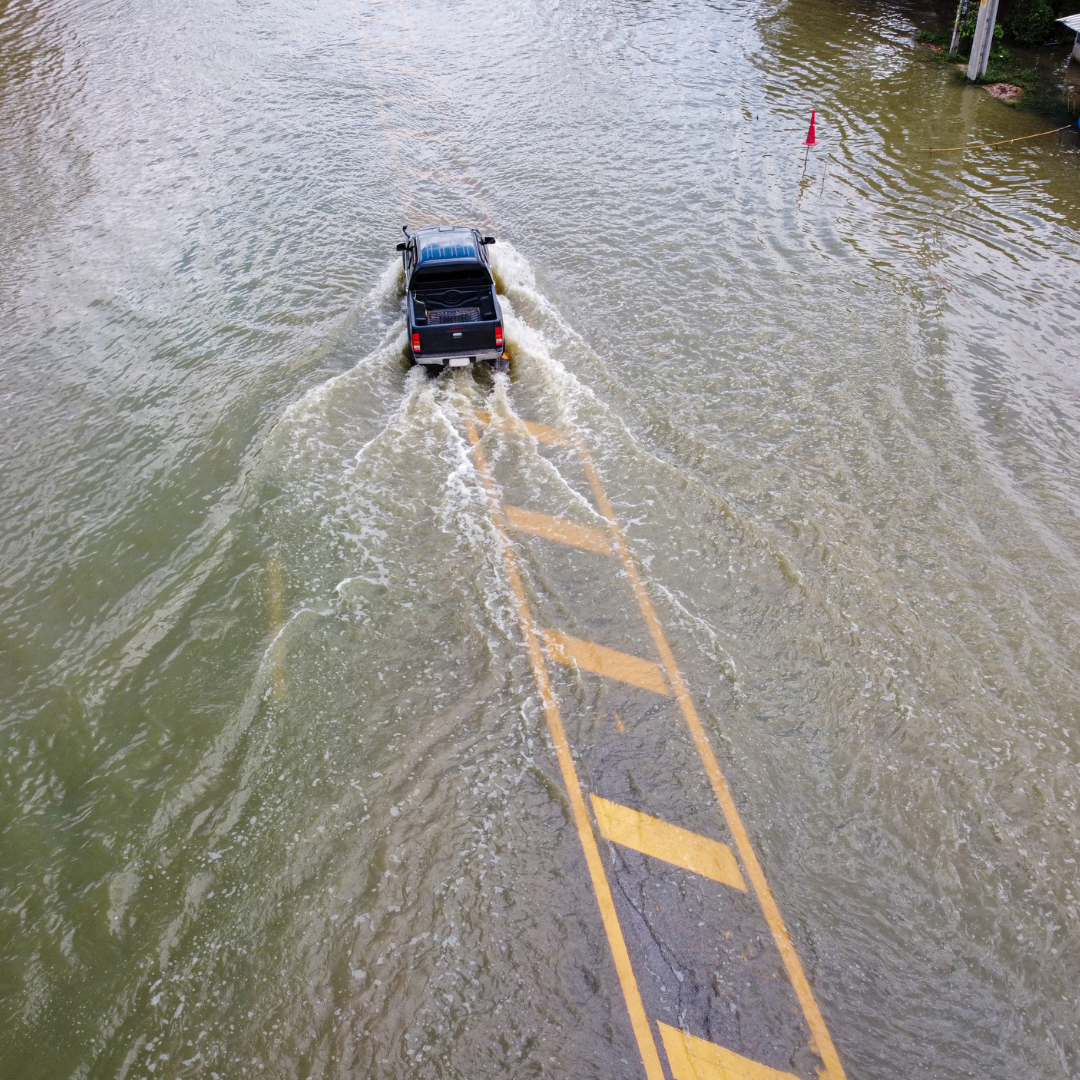
DRIVING THROUGH DEEP WATER

If you approach any kind of flooding, including large puddles of groundwater, you may be tempted to drive right through. But your best—and safest—course of action is always to turn around and find another route. What may not seem like a lot of water can in fact be quite dangerous when you’re behind the wheel.

For starters, it can be hard to gauge how deep the water is, and you can’t see what debris or other hazards may be below the water.

On top of that, driving through deep water can damage or destroy your vehicle’s engine, transmission and other critical components. It can also cause irreversible damage to your car’s complex electrical system. Because of this long-lasting damage, a flooded vehicle is often considered a total loss by insurance providers.

DELAYING MAINTENANCE

Every vehicle manufacturer recommends following a routine maintenance schedule to keep your car running in tip-top shape. In the short term, it may seem like there’s no harm in skipping an oil change, air filter replacement or tire rotation. But the truth is, taking care of these preventative maintenance tasks now can save you from needing major repairs later.

IGNORING WARNING LIGHTS

Modern cars feature a host of warning lights, and each is there to notify you of a particular problem with your vehicle. Ignoring these warning lights could leave you with a major repair down the road. Depending on the problem, it could even jeopardize the safety of you and your passengers.

So don’t make a habit of ignoring your vehicle’s warning lights. The next time that “check engine” light starts flashing, consult your car’s manual and if need be, take your car to a qualified mechanic to get it checked out.

NOT CHECKING YOUR TIRE PRESSURE

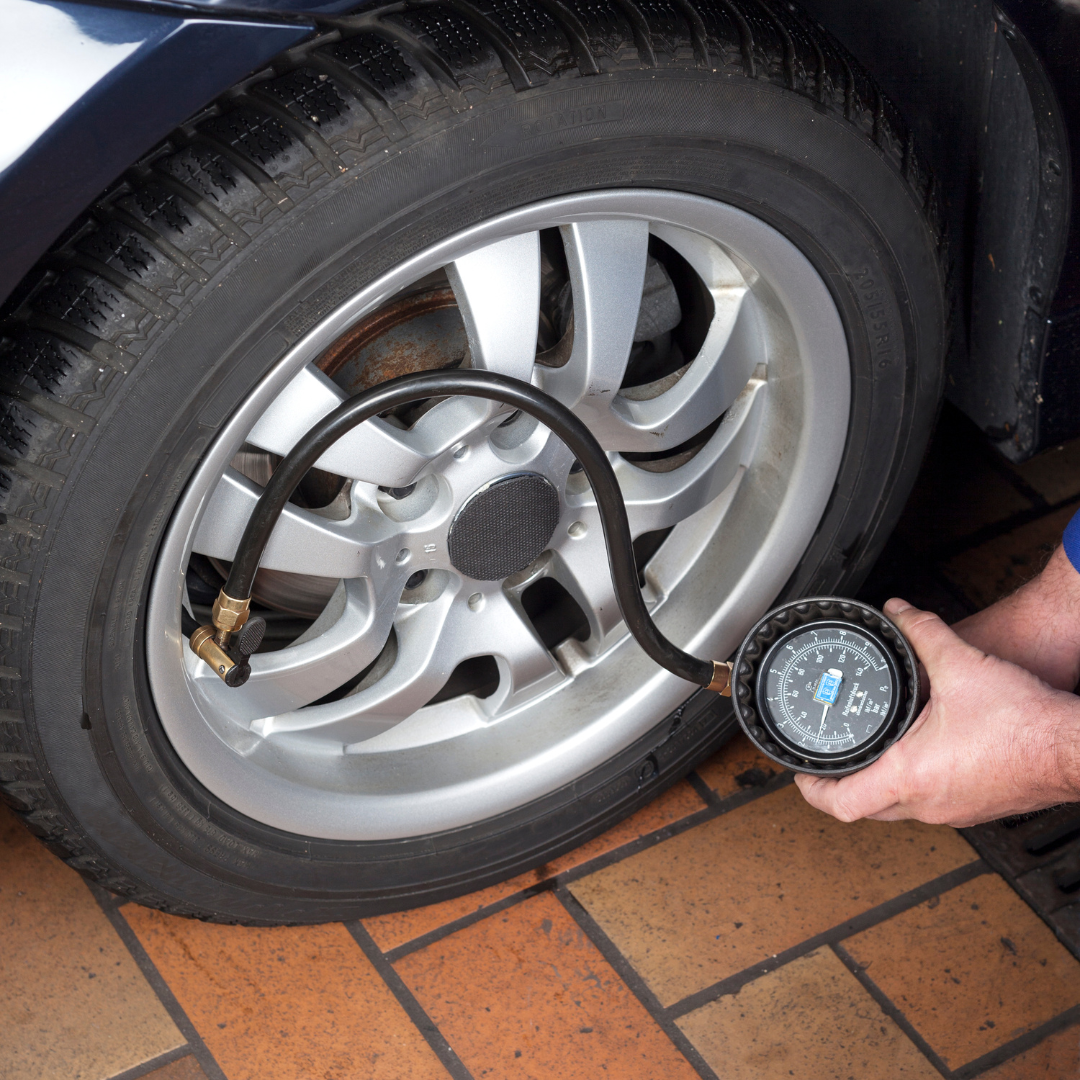
One of the easiest car maintenance tasks to ignore is checking your tire pressure. After all, if your tire isn’t flat, what’s the big deal? But not running your tires at the manufacturer’s recommended air pressure can cause a host of problems ranging from premature or uneven tire wear to bad handling and poor fuel economy.

For that reason, experts recommend that you make a habit of checking your tire pressure once a month. And remember that when it’s cold, your tire pressure will drop between one and two pounds per square inch (PSI) for every ten-degree decrease in temperature. So pay extra attention to your tires as the seasons change.

RIDING THE BRAKES

Your car’s brakes represent one of its most important safety systems. But hitting the brake pedal too hard, or using the brakes too often, can leave this system severely compromised.

For example, applying the brakes for a prolonged period of time (like when slowing your car down a long hill) can cause them to overheat. And when your brakes get too hot, their stopping power is greatly reduced.

Overuse of your brakes can have long-term consequences, too. More braking means you’ll wear through pads and rotors faster, which translates to more frequent service intervals. You can also expect to pay more at the pump, thanks to lower fuel economy caused by frequent braking.

To “break” this bad habit, try to leave some extra space between you and other cars on the roadway. And if you’re descending a long hill, try shifting your car out of overdrive and into a lower gear; this will allow the engine to do some of the braking for you.

DRIVING TOO FAST OVER SPEED BUMPS

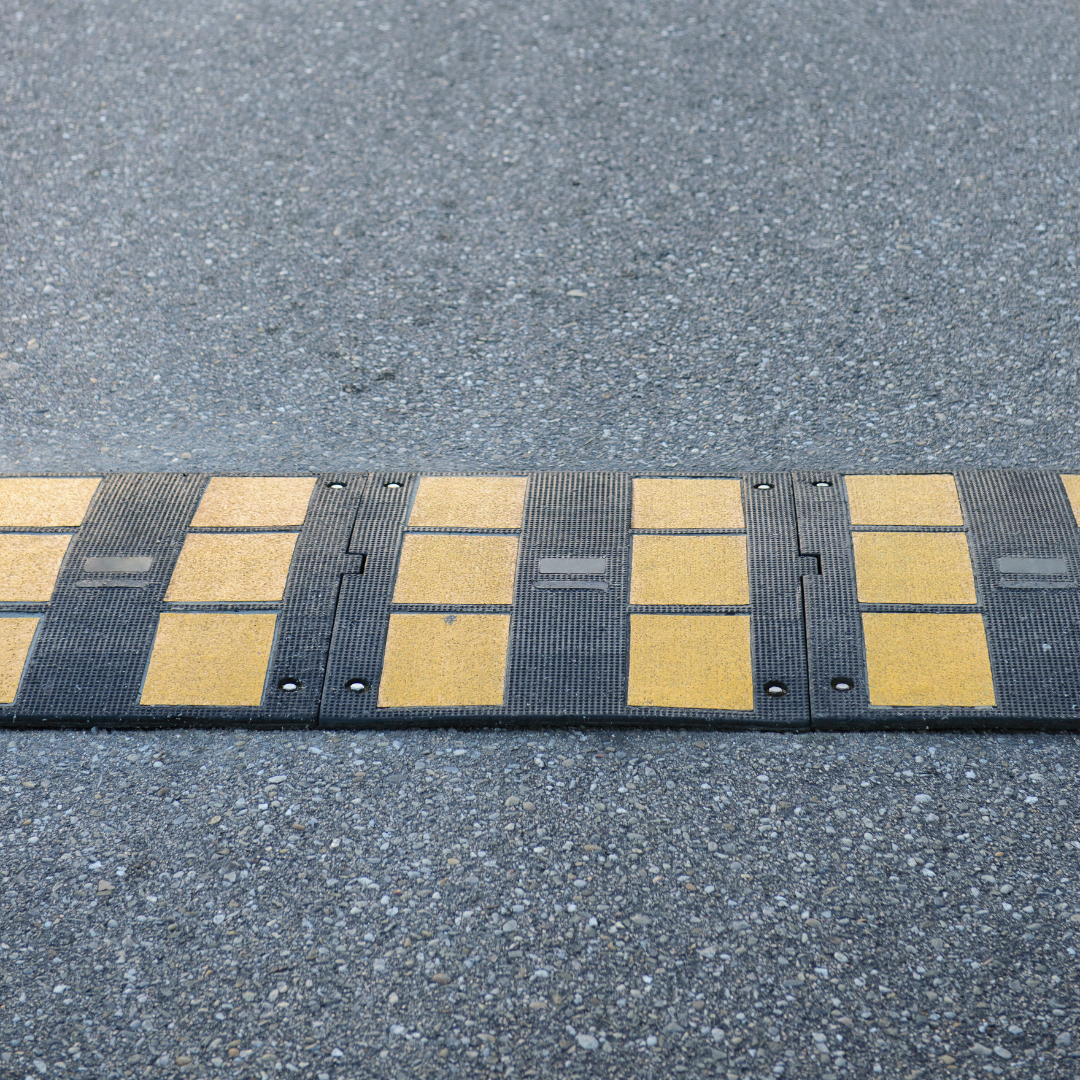
Speed bumps are installed to help slow down traffic, making areas safer for pedestrians. If you drive over a speed bump at a slow speed, your car will be unharmed. But hit a speed bump faster than about 10 miles per hour, and you can do serious damage to your car.

The sudden impact of a speed bump could cause your suspension to bottom out, damaging your shocks and struts. It could also bend other important suspension components or knock your car out of alignment. So take it slow!

LETTING YOUR CAR SIT FOR LONG PERIODS

Parking your car for extended periods of time can take its toll on your vehicle. The time it takes for your vehicle to be damaged by long-term storage will vary based on several factors, including the location of your parked car and how well you’ve prepared it.

However, the negative effects of time on an undriven vehicle can be observed sooner than you may think.

When your car is left undriven, the fuel and battery can go bad. Tires and rubber belts can crack. Rust can begin to form. And rodents could even make your car their new home.

If you have a college student away, for example, consider using a battery maintainer while the car sits. Since maintainers are used for maintenance during periods when cars aren’t going to be used, time isn’t of the essence when charging. This means that a maintainer can give a battery a “low and slow” charge, which is better for its health than a faster charge or a jump.

HITTING POTHOLES

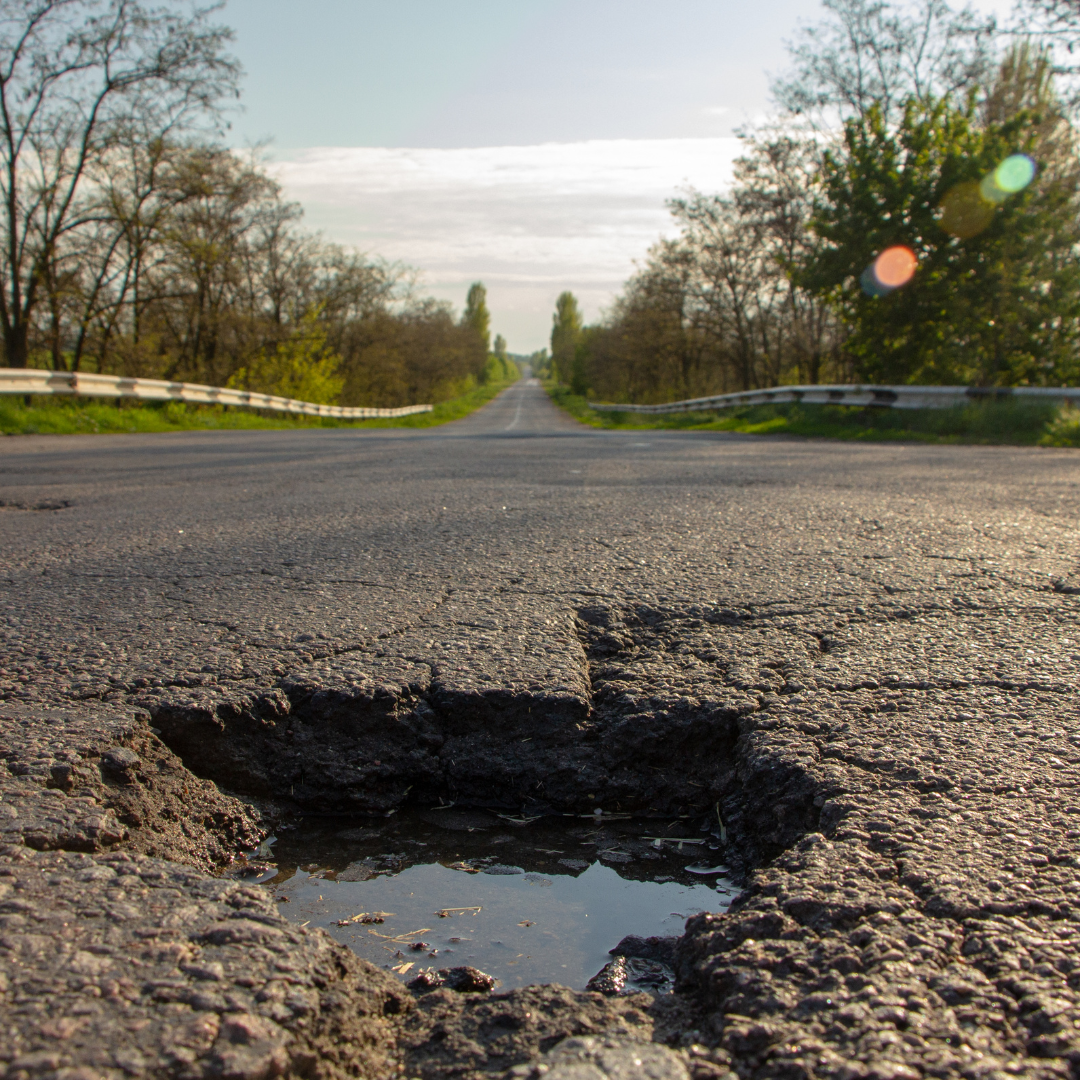
If you live in an area that sees cold winters, the constant freeze-thaw cycles can make potholes a common sight on the roadways. When driving, you should do your best to avoid hitting them at all costs.

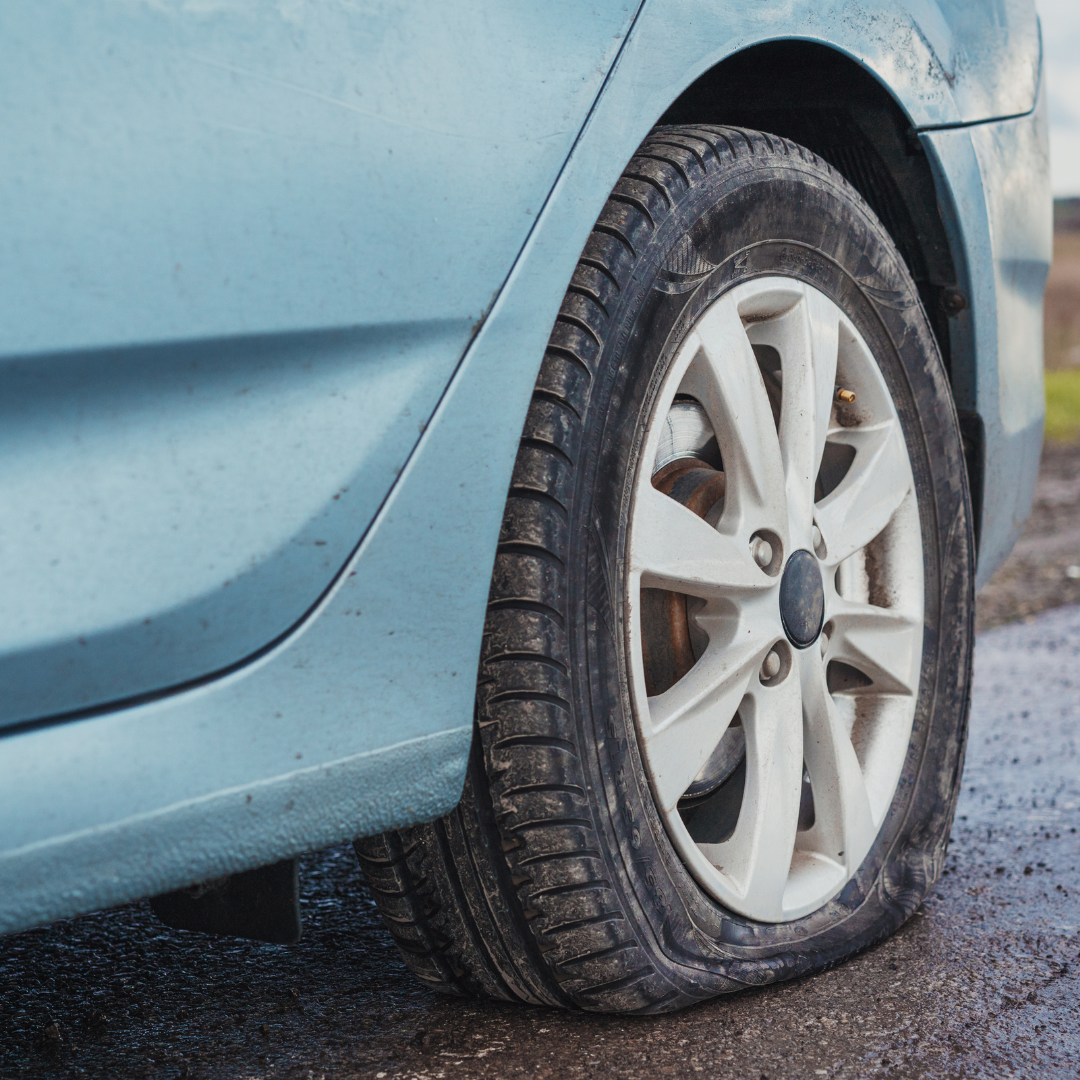
Potholes can cause damage to your vehicle ranging from flat tires or bent wheels to much pricier damage to your suspension, steering system or exhaust system. Next time you encounter a pothole, try to swerve around it. If swerving isn’t possible, reduce your speed to lessen the impact—and any potential damage.

NOT REGULARLY WASHING YOUR CAR

Everybody can appreciate how good a freshly washed car looks. But the benefits of a clean vehicle extend far beyond the visual appeal. If you go long periods of time without washing your car, all that dirt and grime will embed itself in the painted surfaces and will eventually eat away at the clear coat, causing permanent damage.

The consequences are even greater if you live in an area that uses road salt to melt the ice and snow. That’s because salt creates chemical reactions that can corrode the components on your car. This is especially true for any exposed metal, like brake lines and fuel lines.

How to Get Better Gas Mileage (And Other Questions About Fuel Economy)

If you’re looking for ways to tighten your monthly budget, there’s an unexpected place you can look: Your garage.

No, we’re not telling you to sell your car (although that’s certainly an option). Rather, it’s time to take a closer look at the way you drive and take care of your vehicle. As gas prices climb, both of these habits can make a bigger impact on your wallet than you think.

And if you’re looking for affordable car insurance, we can help with that, too.

WHAT IS GAS MILEAGE?

Gas mileage (also known as miles per gallon or MPG) is measured by calculating the number of miles that a vehicle can travel using a single gallon of fuel. Fuel economy is another term that’s commonly used. It’s often referred to in relation to improving fuel efficiency — which means using less gas when you drive.

HOW CAN I FIGURE OUT MY VEHICLE’S MPG?

Since 1977, auto manufacturers have been required to publish some form of miles per gallon metric on new car labels. For modern vehicles, this includes ratings for city, highway and combined MPG values.

In general, vehicles tout better gas mileage during highway driving rather than city (i.e. stop and start) driving. But the combined MPG rating, which represents 55% city driving and 45% highway driving, provides a quick and easy way to compare the fuel efficiency of gasoline vehicles — which is especially helpful if you’re shopping for a new car. You can find these values for your current vehicle through a quick internet search.

If you want to measure the real-world gas mileage of your car, it’s easier than you might think. Follow the steps below from the U.S. Department of Energy’s Office of Energy Efficiency & Renewable Energy:

  • Step 1: Top off your tank. Fill your tank all the way up, then record the current mileage from your odometer (or set your odometer’s trip meter).
  • Step 2: Run it out, then record your numbers again. Once it’s time to fill up again, record the new odometer reading as well as the number of gallons it took to refuel.
  • Step 3: Subtract your readings. If you used the trip meter, you can skip this step. If not, put those elementary math skills to use and subtract your first odometer reading from your second to see how many miles you traveled on one tank.
  • Step 4: Do a little division to determine your MPG. Take your figure from step three and divide the number of miles you drove by the number of gallons it took to fill your tank. Your final number is your MPG for that driving period.

WHAT’S CONSIDERED “GOOD” GAS MILEAGE?

Getting good gas mileage means that you can travel further using less gas.

As a general guide, the U.S. Environmental Protection Agency has designed a fuel economy rating that evaluates vehicles on a scale of 1 (worst) to 10 (best). These numbers can also be found on new car labels. For the 2020 model year, vehicles earning a 1 rating return an MPG of 14 or less, while a score of 10 requires 44 or more MPG.

But there are a lot of other variables that factor into this ‒ from the type of vehicle you drive to the way you drive it. And all of these can add up when it comes to how much you end up spending on gas.

WHAT CAUSES POOR GAS MILEAGE?

Regardless of what kind of vehicle you drive, all of these factors can negatively impact gas mileage:

  • Speed: The faster you drive, the more fuel your vehicle burns up. This includes how fast you accelerate, too.
  • Idling: Keeping your car on for it to warm up or cool down, queuing up at a drive-thru or waiting to pick your kid up from soccer practice can all decrease your vehicle’s fuel economy.
  • Aerodynamic drag and excess weight: Driving too fast or traveling with a rooftop cargo carrier? These can increase wind resistance, which causes your vehicle to use more gas. And towing any kind of trailer or hauling too much in your trunk, bed or back seat also requires more fuel.
  • Poor maintenance: From underinflated tires to an unattended engine issue, failure to consistently “tune-up” your vehicle can cost you a lot more at the pump. It also can create potential safety risks.
  • Quick trips: A quick run to the supermarket on Monday. Stopping by the bank on Wednesday. While it may be convenient to run these errands one at a time, it can wreak havoc on your fuel economy. Quick, short trips like this from a “cold start” eat up fuel, because your engine needs to warm up before it can run efficiently.

HOW CAN I IMPROVE MY GAS MILEAGE?

The U.S. Department of Energy’s Office of Energy Efficiency & Renewable Energy and Consumer Reports offer several ways that you can improve your MPG:

  • Drive more efficiently.
    • Follow the speed limit, and drive sensibly ‒ not aggressively (e.g. quick accelerations, hard stops, etc.).
    • On the highway, don’t speed up and slow down (unless you need to for safety). Once you get up to speed, stay there. Use cruise control when possible.
    • Remove the unnecessary extra weight, avoid idling and take the cargo box off the roof of your vehicle (unless you really need to use it) to help even more.
  • Keep your car in shape.
    • Make sure your engine is tuned, keep tires properly inflated and use the right grade of motor oil.
  • Plan and combine trips.
      • Spend less time sitting in traffic by avoiding rush hour on daily commutes.
      • Run all your errands on one day rather than taking multiple short trips during the week.
      • If you have an especially long commute, ask your employer if you can work from home a day or two per week.
1 2 3

Search

+